

If you’re renting in Dublin and have to move out before your next place is sorted, the simplest answer is to put your things into a short-term storage unit, keep a bag or two with you, and move everything into the new place once you have the keys. At Stow in Clondalkin you can book online and move in the same day, and after a 12-week minimum your rental rolls on every 4 weeks, so you’re not locked into paying for storage longer than you need it.
Anyone who has rented in Dublin knows how this goes. The notice arrives, the viewings are packed, the good places are gone in an afternoon, and the dates almost never line up. This guide covers the most common situations renters find themselves in, and how to handle your stuff in each one without losing your mind or your deposit.
Where can I store my stuff between leases?
You’ve got three realistic options:
- Friends and family. Free, but only if someone has a spare room or a garage, and only if you don’t mind your couch living in your brother’s hall for three months. It works for a few boxes; it rarely works for a full flat.
- A removals company with storage. Convenient if you’re hiring movers anyway, but you usually can’t get at your things without booking a delivery, and you pay for handling each time.
- A self storage unit. You load it yourself (or with your movers), you can get in whenever you need something, and you only pay for the space. For most renters in a gap, this is the most flexible option.
At Stow, all units are indoor and walk-in, and you get in with an app on your phone seven days a week. That matters more than you’d think when you’re living out of a suitcase and realise your work shoes are in a box somewhere.
Can I rent storage for just a few months?
Yes. Short-term storage is exactly what most renters need. At Stow the minimum rental is 12 weeks, and after that it continues on a rolling 4-weekly basis, so you can stay for three months or six or longer, and give notice when you’ve found your next home. There are no setup fees or admin charges, and new customers pay €1 for their first 4 weeks.
Situation 1: You’ve been given notice to leave
A notice of termination is stressful, especially when the market is tight. Before anything else, check that the notice is valid and that you’ve been given the right amount of time. Notice periods depend on how long you’ve been in the tenancy, and the rules have changed several times in recent years. The Residential Tenancies Board (RTB) is the place to check your rights.
Once you know your date, storage can take a lot of pressure off:
- Move your things in stages. Rather than doing it all on one frantic weekend, start moving the stuff you won’t need (books, winter coats, spare bedding, the bike you haven’t ridden since lockdown) into storage a few weeks early.
- Hand back a clean, empty flat. It’s far easier to clean properly and do a final check for your deposit when the rooms are already clear.
- Keep your options open. If your stuff is in storage, you can take a short let, stay with family, or take a room in a house share while you keep looking, without having to commit to the first place that’ll take you.
Situation 2: There’s a gap between tenancies
This is the classic one. Your lease ends on the 31st, the new one starts on the 15th, and there’s two weeks of nowhere in between. Or worse, you haven’t found the next place yet.
The practical plan:
- Book your unit a week or so before you move out so you’re not scrambling on the day.
- Pack a “gap bag” with at least two weeks of clothes, chargers, toiletries, work stuff, documents and anything you’d need if the gap stretches out. Then pack a second box of “might need” things and put it right at the front of the unit.
- Load the unit with the big stuff at the back and the boxes you’ll want first at the front.
- Move in to the new place when it’s ready. One van trip from the unit, and you’re done.
Situation 3: You’re moving into a furnished let or a house share
Plenty of people find their next place is furnished, or it’s a room in a shared house with no space for your own furniture. Selling a good couch, bed or table for a fraction of what you paid, only to buy them all again in a year or two, is a painful way to lose money.
Storing your furniture while you’re in a furnished let means you can keep the pieces you love and actually own them when you get your own place again. If you’re not sure it’s worth it, do a quick sum: what would it cost to replace everything you’d sell, compared with storing it for the time you expect to be in the furnished place?
Situation 4: You’re moving back home for a while
More and more people in their twenties and thirties are moving back in with their parents to save for a deposit or ride out a rough patch in the rental market. Your old bedroom probably isn’t big enough for the contents of a one-bed flat, and your parents may have turned it into a gym in the meantime.
A storage unit means you can move back home with just what you need day to day, and keep the rest safe for when you get your own place. If you’re saving hard, it’s worth knowing that a small unit for boxes and a few pieces of furniture costs much less than a unit for a full flat. Our Dublin storage price guide explains how prices work.
What size unit do renters usually need?
- Room in a house share: a small unit is usually plenty for boxes, a bike, a desk and a chair.
- Studio or one-bed apartment: a small to medium unit, depending on how much furniture you own.
- Two-bed apartment or house: a medium to large unit.
Our storage calculator will give you a recommendation based on your actual items.
Tips for storing your things between rentals
- Label every box on two sides with the room and a short list of what’s inside.
- Take bed frames and tables apart, and put all the screws and bolts in a labelled zip-lock bag taped to the frame.
- Don’t store damp items. Make sure everything, especially bedding, towels and a fridge or washing machine, is fully dry before it goes in. Our guide to stopping damp and mould in stored furniture explains why.
- Leave a walkway down the middle of the unit so you can reach things without unpacking everything.
- Photograph your stuff before it goes in, for your own records.
Frequently asked questions
Where can I store my stuff between leases in Dublin?
A self storage unit is the most flexible option. Stow in Clondalkin, Dublin 22, offers indoor units with same-day move-in, seven-day app access and rolling 4-weekly terms after a 12-week minimum.
Can I rent storage for a few months while I find a new place?
Yes. After the 12-week minimum, your rental rolls on every 4 weeks, so you can keep it as long as your search takes and give notice when you’re ready.
Can I get my things out at the weekend?
Yes. You can access your unit seven days a week using the Stow app.
Do I need a Dublin address to rent a unit?
You’ll need a smartphone and a copy of your ID (passport or driving licence) to book. If your situation is unusual, contact us and we’ll talk it through.
Take the pressure off your next move
Stow is in Clondalkin, a short drive from most of West and South Dublin. If you’re new to the area, our local guide to self storage in Clondalkin explains where we are and how to get here. View available units and get an instant quote, call 01 966 0992 or email hello@stow.ie.
Recent Post
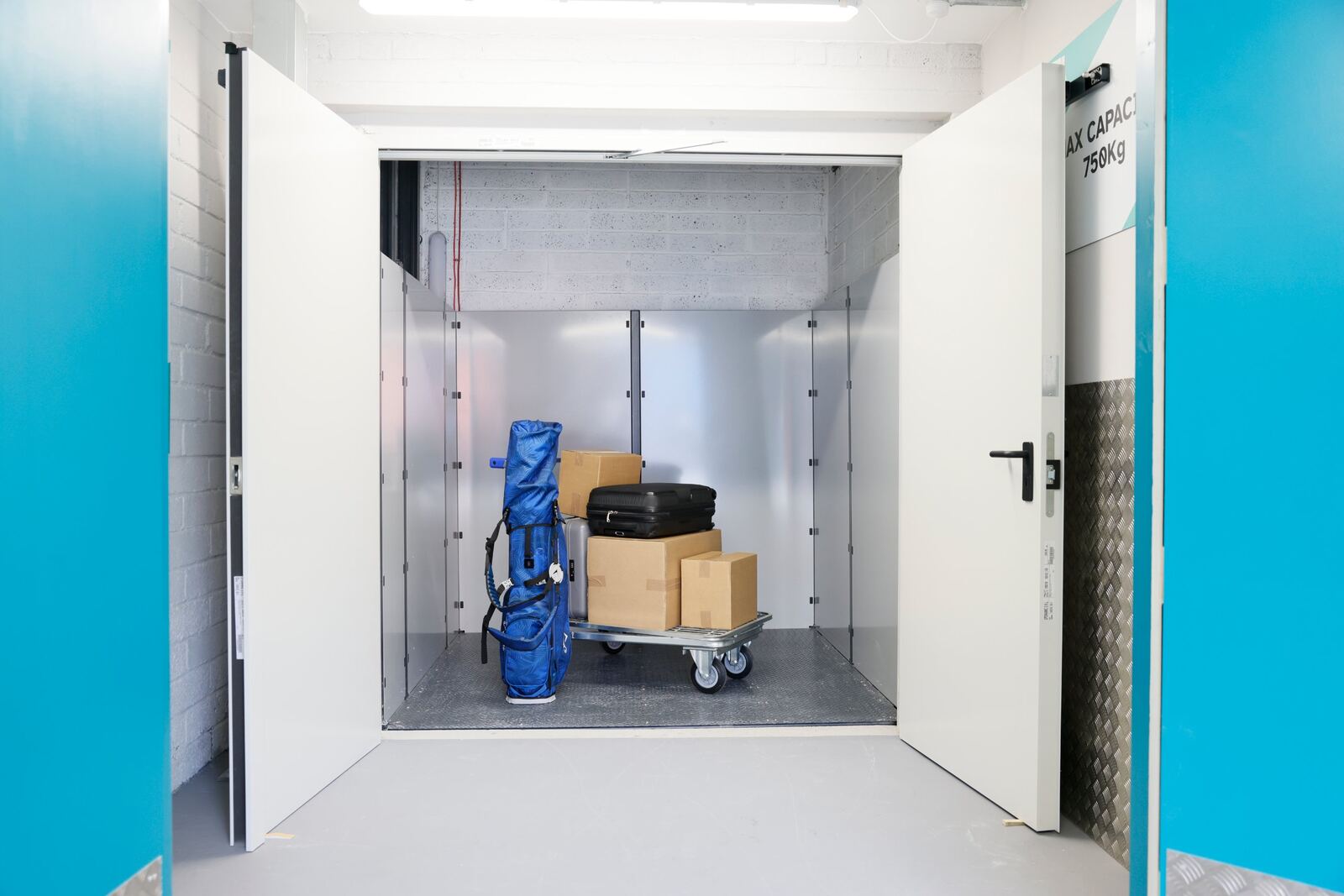
Club kit scattered across volunteers' sheds and attics? Here's how sports clubs, schools, scout groups, charities and community groups in Clondalkin use a shared storage unit to keep equipment secure, dry and accessible to the people who need it.
Starting a new job at Grange Castle Business Park or relocating to West Dublin? Here's how to store your belongings while you house-hunt, what you need to rent a unit, and why storage near work makes settling in easier.