
To stop furniture going mouldy in storage in Ireland, make sure everything is completely clean and dry before it goes in, use breathable covers instead of plastic wrap, keep items off the floor and away from walls so air can move, and choose an indoor storage unit rather than an outdoor shipping container. Mould needs moisture, and in a damp climate the biggest risks come from items that go into storage slightly wet, and from storage that sees big temperature swings, which causes condensation.
If you’ve ever opened a box from the attic and been hit by that musty smell, you already know the problem. Ireland is a famously damp country, and furniture, mattresses, clothes and paperwork can all suffer if they’re stored the wrong way. Here’s how to get it right.
Why is damp such a problem for stored furniture in Ireland?
Ireland’s air is humid all year round, not just in winter. Mould grows when moisture sits on or in a material for long enough, especially in still air. In storage, three things usually cause the trouble:
- Things go in damp. A mattress that’s been in a cold bedroom, a couch that was cleaned the day before, a washing machine that wasn’t drained properly. Wrap any of those up and shut them away, and you’re giving mould a head start.
- Condensation. When the temperature drops, moisture in the air condenses on cold surfaces. The bigger and faster the temperature swings, the more condensation forms.
- No airflow. Items packed tightly against walls, floors and each other trap moist air in the gaps.
Is an indoor storage unit better than a shipping container?
For anything that can be damaged by damp, yes, indoor storage is the safer choice. Here’s why.
A shipping container is a steel box sitting outdoors. On a sunny afternoon it warms up; on a cold night the steel cools quickly. That cycle can cause condensation to form on the inside of the walls and roof, which then drips onto whatever is stored underneath. Containers can also let in water around worn door seals, and the floor is often close to the ground.
An indoor unit sits inside a building. It’s protected from rain, wind and direct sun, and the building shields it from the sharpest temperature swings. That doesn’t make damp impossible (if you store a wet mattress anywhere, it’ll suffer), but it removes most of the outside conditions that cause problems.
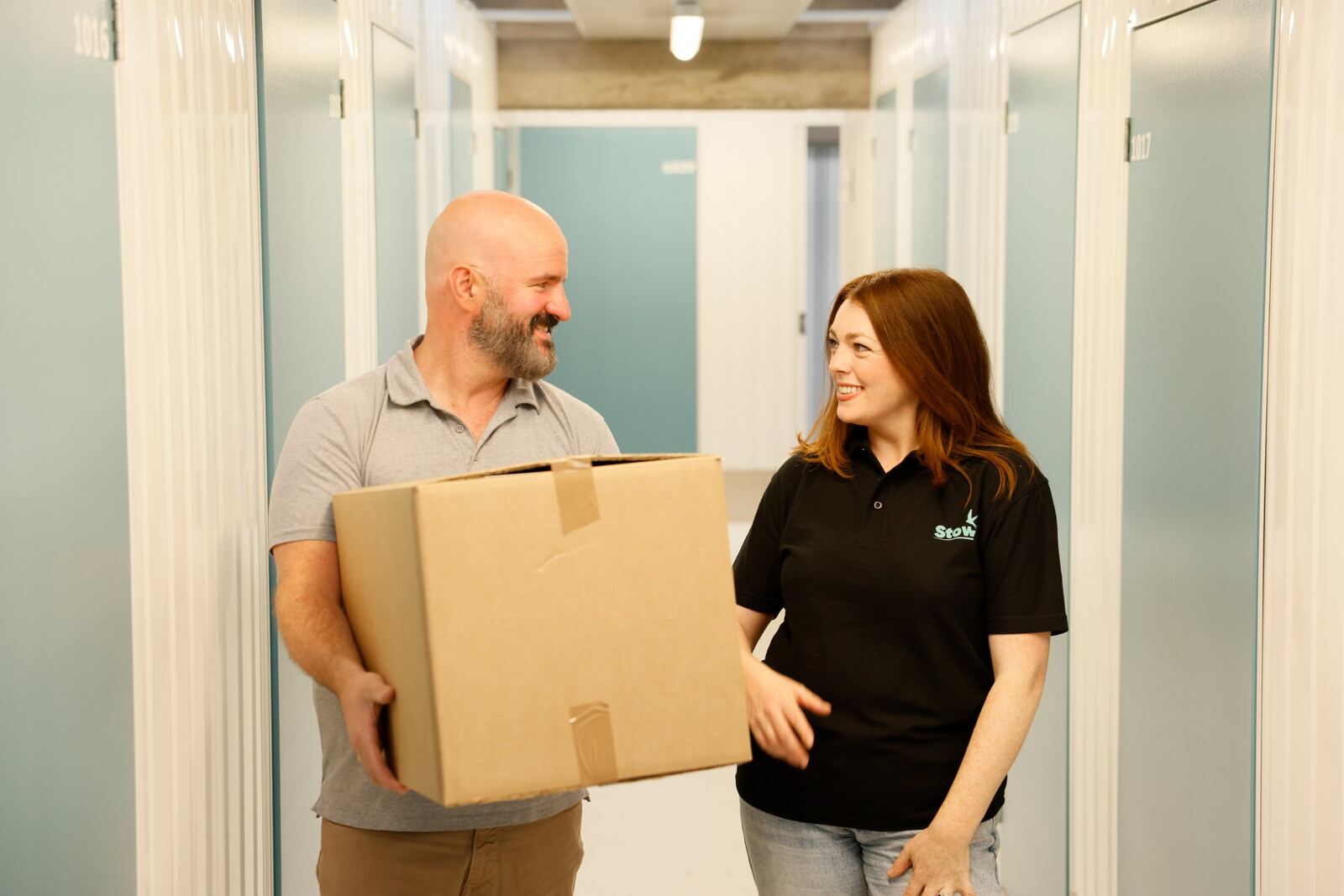
At Stow in Clondalkin, every unit is an indoor, walk-in unit inside our purpose-built building. You won’t find outdoor containers here.
How do I stop furniture going mouldy in storage?
1. Clean everything first
Dust, crumbs and food residue feed mould. Hoover upholstery, wipe down wooden and laminate surfaces, and clean out fridges, freezers and washing machines thoroughly.
2. Dry everything completely
This is the single most important step. If you’ve cleaned anything with water, give it at least a day or two in a warm, ventilated room before it’s packed. Leave fridge and freezer doors open for a couple of days after defrosting, and drain washing machines and dishwashers fully.
3. Use breathable covers, not plastic wrap
Wrapping a sofa in plastic film feels protective, but over long periods it can trap any moisture inside. For longer-term storage, use cotton dust sheets, old bedsheets or purpose-made breathable furniture covers. Plastic wrap is fine for protecting items in transit; take it off or loosen it once they’re in the unit.
4. Keep things off the floor
Put furniture on pallets, wooden slats or a sheet of cardboard, and use shelving for boxes. This lets air move under your things and keeps them clear of any cold floor surfaces.
5. Leave gaps for air
Don’t push furniture hard against the walls. A few centimetres of space between items and walls, and a walkway down the middle of the unit, keeps air moving and lets you check on things.
6. Use moisture absorbers for long stays
If you’re storing for many months, a few moisture-absorbing tubs or sachets placed around the unit (not touching fabrics) can help. Check and replace them when you visit.
7. Visit now and then
A quick check every couple of months means you’ll spot any problem early. With seven-day app access at Stow, it’s easy to pop in when it suits you.
How to store a mattress long term
- Clean and air it thoroughly for a day before storage. Hoover both sides.
- Use a breathable mattress bag or a cotton cover rather than sealing it in plastic for months.
- Store it flat if you can, on a clean surface raised off the floor. Many manufacturers advise against storing mattresses on their side for long periods because the filling can shift. If space means it has to stand, keep it upright and supported, and check the manufacturer’s advice.
- Don’t stack heavy things on top. It can permanently compress the filling.
Storing other items without damp damage
- Wooden furniture: clean, dry and polish or wax before storing. Take tables and bed frames apart if you can.
- Upholstered furniture: hoover, cover with breathable fabric, and keep cushions in place so the shape holds.
- Clothes and bedding: wash and dry fully. Store in breathable bags or sturdy boxes, never damp.
- Books and paper: pack upright in small, strong boxes and keep them off the floor.
- Electronics: store in original boxes if you have them, keep them dry, and remove batteries.
- Leather: clean, condition and cover with breathable fabric. Leather in plastic is a recipe for mould.
What not to put in storage
Anything wet, anything perishable, and anything that smells of damp already. A single mouldy item can spread spores to everything around it, so if something is already affected, deal with it before it goes anywhere near your unit. For safety, hazardous and flammable materials, perishable food and living things can’t be stored.
Frequently asked questions
Is an indoor storage unit better than a shipping container?
For furniture, mattresses, clothes, paperwork and electronics, yes. Indoor units are protected from rain and direct sun, and the building shields them from the sharp temperature swings that cause condensation inside steel containers.
How do I stop furniture going mouldy in storage?
Clean and fully dry everything before storing it, use breathable covers instead of plastic wrap, keep items off the floor and away from walls, use moisture absorbers for long stays, and choose indoor storage.
Should I wrap furniture in plastic for storage?
Plastic is useful for protecting furniture while it’s being moved, but for longer storage, a breathable cover is better because it lets any moisture escape.
How long can furniture stay in storage?
As long as you need, if it’s stored properly. Many people store furniture for months or years during moves, renovations and time abroad.
Store it properly, and it’ll come back the way it went in
Stow’s indoor units are in Clondalkin, Dublin 22. Read our local guide to self storage in Clondalkin to find us, or our guide to storing your things while you’re abroad if you’re planning a long stay. View available units and get an instant quote, call 01 966 0992 or email hello@stow.ie.
Recent Post
Club kit scattered across volunteers' sheds and attics? Here's how sports clubs, schools, scout groups, charities and community groups in Clondalkin use a shared storage unit to keep equipment secure, dry and accessible to the people who need it.

Starting a new job at Grange Castle Business Park or relocating to West Dublin? Here's how to store your belongings while you house-hunt, what you need to rent a unit, and why storage near work makes settling in easier.