

The simplest place to put your furniture during a home renovation is a nearby self storage unit. It keeps your belongings out of the builders’ way, away from dust and paint, and safe from knocks and theft, while leaving you free to live in the parts of the house that aren’t being worked on. For most Dublin renovations, people rent a unit for somewhere between 2 and 6 months, depending on the size of the job.
Ireland is in the middle of a home improvement boom. Between SEAI-supported energy upgrades, extensions, attic conversions and people finally getting around to the kitchen they’ve wanted for years, a lot of Dublin homes have builders in at some point. This guide covers your options for storing furniture during the works, how to work out how long you’ll need storage for, and how to pack so everything comes back in the same condition it left.
Why you need to clear rooms before renovation work starts
It’s tempting to think you can just push everything into the middle of the room, throw a dust sheet over it and get on with things. For a quick paint job, maybe. For anything more involved, it rarely works out. Here’s why most builders will ask you to clear the space:
- Dust gets everywhere. Plastering, sanding, cutting tiles and knocking walls create fine dust that works its way into fabrics, drawers, electronics and the inside of cupboards. Dust sheets slow it down but don’t stop it.
- Trades need room to work. Electricians need access to walls and floors. Floor fitters need empty rooms. Plasterers need to move scaffolding and boards around. Every time furniture has to be shuffled, it costs time, and time costs money.
- Accidents happen. Dropped tools, paint spills, heavy materials being carried through doorways. Your good sofa is much safer a few miles away.
- Insurance and liability. Many contractors are understandably reluctant to take responsibility for damage to furniture left in a work area.
- Security. During works, doors and windows may be open, keys handed out, and people coming and going all day. Valuables and expensive items are best moved somewhere secure.
Your options for storing furniture during renovation
1. Move it to another room in the house
If you’re only doing one room and you have space elsewhere, this is the cheapest option. The downside is that it turns another room into a store, and if the works spread (and they often do), you end up moving everything twice. It also doesn’t protect from dust if the room is on the same floor.
2. Ask family or friends
Plenty of people lean on a parent’s garage or a friend’s spare room. It’s free, but it can strain goodwill if the job overruns, access can be awkward, and it’s hard to complain if something gets damaged.
3. A container on your driveway
Some people hire a storage container and leave it outside the house. It’s convenient, but you need a driveway big enough, permission if it goes on the road, and containers can suffer from condensation and temperature swings, which isn’t great for timber furniture, mattresses or electronics. They’re also a visible target.
4. A self storage unit nearby
A clean, dry, internal storage unit is usually the best balance of protection, flexibility and cost. You pay only for the space you need, for as long as you need it, and you can get in to grab something whenever you want. If the job runs over, you simply keep the unit a bit longer.
How long should I rent storage during a renovation?
This is one of the most common questions we get, and the honest answer is: longer than the builder’s estimate. Renovation timelines in Ireland frequently slip because of material delays, trade availability, weather, and the discoveries that only show up once walls are opened. As a rough guide:
- Single room refresh (painting, flooring, new fitted wardrobes): 2 to 6 weeks of works. Allow 1 to 2 months of storage.
- New kitchen or bathroom: typically 4 to 8 weeks of works. Allow 2 to 3 months.
- Deep energy retrofit (insulation, windows, heat pump, ventilation): often 6 to 12 weeks, sometimes longer if the house is occupied in phases. Allow 3 to 4 months.
- Single-storey rear extension: often 3 to 5 months. Allow 4 to 6 months, but you may not need to clear the whole house for all of that time.
- Whole-house renovation where you move out: 6 to 12 months or more. Allow for the full duration plus a buffer.
At Stow, the minimum rental is 12 weeks, which lines up nicely with most kitchen, bathroom and retrofit jobs. After that, your rental rolls on every 4 weeks with no long-term contract, so if the job overruns you just keep going, and when it’s done you give notice and move out.
Storage during an SEAI retrofit
Energy upgrades supported by the Sustainable Energy Authority of Ireland (SEAI) have become one of the most common reasons Dublin households clear rooms. Internal wall insulation (dry-lining), attic insulation, new windows and doors, heat pump installation and mechanical ventilation can all require rooms to be emptied, sometimes the whole house at once.
A few retrofit-specific tips:
- Internal insulation means every external wall gets worked on. Wardrobes, bookshelves, radiators and anything fixed to those walls needs to come away, and rooms need to be cleared fully.
- Attic insulation means clearing the attic. Those boxes of Christmas decorations, old toys and paperwork need to go somewhere. A small storage unit can take the lot, and you might find you don’t want all of it back.
- Windows and doors are often done in one go. Expect dust and debris throughout the house for a few days.
- Your contractor or One Stop Shop provider should give you a schedule. Ask which rooms need to be empty and when, and plan storage around that.
Storage during a house extension
Extensions are a bit different because the main build often happens outside the existing house. The disruption comes when the extension is knocked through, which tends to be the kitchen and living area at the back of the house. Many families in places like Lucan, Clondalkin, Tallaght and Palmerstown move their kitchen table, sofas, sideboards and kids’ toys into storage for that phase, sometimes while living with a temporary kitchen set up in a front room.
It’s also a smart time to declutter. When the new space is finished, you get to decide what really earns a place in it. Our guide to decluttering your Dublin home without getting rid of everything has some useful ideas.
What should go into storage during renovation works?
Not everything needs to go. Focus on the items most likely to be damaged or in the way:
- Sofas, armchairs and upholstered furniture (dust is very hard to get out of fabric)
- Dining tables, sideboards and timber furniture that scratches easily
- Rugs, curtains and soft furnishings
- Beds and mattresses from rooms being worked on
- Artwork, mirrors, framed photos and anything fragile
- Electronics such as TVs, speakers and computers that you won’t need during the works
- Books, ornaments and the general contents of shelves and display cabinets
- Boxes from the attic or under the stairs if those spaces are part of the job
Keep at home the essentials you’ll need day to day: a few changes of clothes, the kettle and basic kitchen kit, important documents, medication, chargers, work equipment and anything the kids can’t live without.
How to pack furniture for renovation storage
- Clean before you pack. Wipe down furniture and make sure everything is fully dry. Moisture trapped in fabric or timber is what causes musty smells.
- Disassemble what you can. Bed frames, tables and some wardrobes take up far less space flat. Put screws and fittings in a labelled freezer bag and tape it to the piece they belong to.
- Wrap carefully. Use furniture blankets or old duvets for timber, bubble wrap for glass and mirrors, and breathable covers rather than plastic for sofas and mattresses over longer periods.
- Use good boxes. Uniform, sturdy boxes stack better and protect better. Label every side with the room and contents.
- Put things you’ll need at the front. If there’s any chance you’ll need something mid-renovation, like the summer clothes box or a specific tool, load it last.
- Take photos. A few quick photos of furniture condition before it goes into storage are useful for peace of mind.
What size storage unit do I need for a renovation?
It depends how much of the house you’re clearing:
- One room (e.g. a bedroom or the attic): a small to medium unit
- Kitchen and living area for an extension: a medium to large unit
- Several rooms for a retrofit: a large unit
- Whole house while you move out: a large to extra-large unit
Our storage calculator will suggest a size based on the items you add, and you can read more in our size guide. If your plans change part way through, you can move to a bigger or smaller unit, subject to availability.
Budgeting for storage during your renovation
Storage is a small line item compared to the cost of a renovation, but it’s worth building it into your budget from the start rather than being caught out. Things to factor in:
- The rental itself. Prices depend on unit size and how long you rent. You can get an instant quote online.
- Billing cycles. Some providers bill monthly and some, including Stow, bill every 4 weeks. Over a year, that’s 13 billing periods rather than 12, so compare like with like.
- Fees. Check for setup or admin fees. Stow doesn’t charge any.
- Insurance. You’re responsible for insuring stored items. Check whether your home insurance covers goods in storage, or add optional goods protection when you book.
- Moving costs. Van hire or a removals firm, plus boxes and packing materials.
New Stow customers get their first 4 weeks for €1, which takes a nice bite out of the cost of the first stage of a renovation.
Why Dublin homeowners choose Stow for renovation storage
- Close to home. We’re on Ninth Lock Road in Clondalkin, Dublin 22, handy for Clondalkin, Lucan, Palmerstown, Ballyfermot, Tallaght, Citywest and the rest of West Dublin.
- Clean, dry, internal units. A brand-new building, so your furniture isn’t sitting in a damp container.
- Access seven days a week through the Stow app on your phone, so you can drop in to grab something on a Saturday morning.
- 24/7 monitored CCTV, perimeter security, a building-wide alarm and early fire detection.
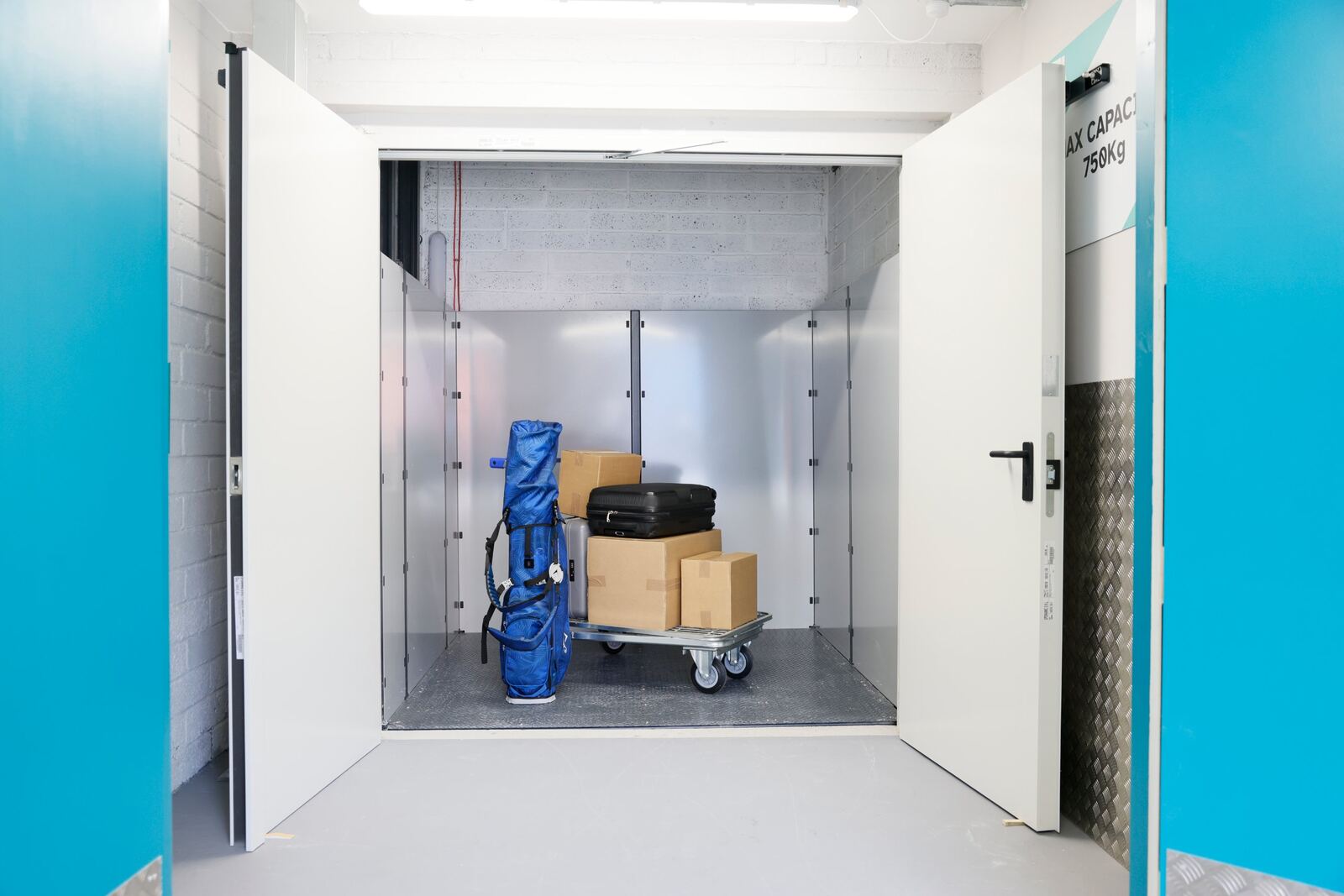
- Easy loading with parking outside, drive-up access for vans, trolleys and a goods lift.
- No setup fees and no long lock-in. 12-week minimum, then rolling every 4 weeks.
- Same-day move-in if your builder suddenly needs the room cleared tomorrow.
Frequently asked questions
Where do I put my furniture while my house is being renovated?
The most practical option is a nearby self storage unit. It keeps furniture away from dust, damage and the builders’ path, and you can access it whenever you need to. Moving furniture into other rooms or a driveway container can work for small jobs but offers less protection.
How long should I rent storage during a renovation?
Take your builder’s estimate and add a buffer of at least a few weeks. A kitchen or bathroom usually needs 2 to 3 months of storage, a retrofit 3 to 4 months, and an extension 4 to 6 months. Choose a provider with rolling terms so you can extend easily if the job overruns.
Can I get things out of storage during the renovation?
Yes. At Stow you can access your unit seven days a week using the app on your phone.
Will my furniture be safe from damp?
Stow’s units are internal units in a modern building, which protects against the condensation and temperature swings you can get in outdoor containers. Make sure everything is clean and fully dry before you pack it.
Do I need insurance for items in storage?
Yes, you’re responsible for insuring your stored belongings. Check your home insurance first, or add optional goods protection when you book with Stow.
What if my renovation finishes early?
Once you’re past the 12-week minimum, Stow’s rental rolls on a 4-weekly basis, so you can give notice and move out when you’re ready.
Get your renovation off to a clean start
Clearing the house before the builders arrive makes the job faster, cleaner and far less stressful. Check available units and get an instant quote, take a look at our personal storage options, or call us on 01 966 0992. Your first 4 weeks are just €1.
Recent Post

Heading off for a year in Australia, a contract in the Middle East, or finally moving home to Ireland? Here's how to store your belongings in Dublin while you're away, manage a storage unit online from abroad, and bridge the gap while you house-hunt.
Irish winters are hard on garden furniture, barbecues and bikes. Here's how to clean, prepare and store them properly so they're ready for spring, plus options for apartment dwellers with no shed or garage.