

In 2026, a self storage unit in Dublin typically costs somewhere between about €60 and €150 a month for a small unit, €150 to €320 for a medium unit, and €300 to €500 or more for a large unit. Where you are in the price range depends on the unit size, the location, how long you rent for, whether billing is monthly or every 4 weeks, and what extras are added on. Facilities outside the city centre, like those in Clondalkin and West Dublin, are generally more competitive than city-centre locations, and introductory offers can cut the cost of your first month dramatically. At Stow in Clondalkin, for example, new customers pay just €1 for their first 4 weeks.
This guide breaks down what you can expect to pay for storage in Dublin, what affects the price, the costs people often forget about, and how to make sure you’re comparing like with like.
How much is a storage unit per month in Dublin?
Published price surveys give a useful picture of the Dublin market. Here’s a summary of typical ranges, based on publicly listed rates collected by Irish price comparison sites in 2026:
| Unit size | Roughly fits | Typical Dublin price range |
|---|---|---|
| Locker / very small (around 10 to 25 sq ft) | A few boxes, suitcases, documents, a bike | About €60 to €150 per month |
| Medium (around 35 to 75 sq ft) | A room’s worth, or a one-bed apartment | About €150 to €320 per month |
| Large (around 100 to 200 sq ft) | A two- to three-bed house | About €300 to €530 per month |
Sources: Packhood, The Cost of Storage in Ireland: 2026 Data Report and SelfStoragePrices.ie, Self Storage Dublin 2026. These are market-wide ranges from surveys of multiple providers, not Stow’s prices, and they change over time. Always get a current quote.
A couple of things are worth knowing about those figures. First, they’re broad, because Dublin storage operators size and price their units differently. Second, headline “from” prices are usually the smallest unit at the cheapest location, not what most people actually end up paying. And third, the national average is lower than Dublin: storage in cities like Cork, Limerick and Waterford tends to cost noticeably less, which is worth bearing in mind if you see national figures quoted.
Is self storage cheaper outside the city centre?
Generally, yes. Land and building costs are higher in and around the city centre, and that’s reflected in storage prices. Facilities in suburban areas such as Clondalkin, and the wider West Dublin area, can usually offer more competitive pricing for the same size of unit. Price surveys also note that the M50 acts as a rough dividing line between city-centre premium pricing and the more competitive outer-ring locations.
There’s a practical benefit too. If you live in West or South-West Dublin, a facility in Clondalkin is likely to be much closer to home than one in the city, which saves on van hire, fuel and time on moving day, and makes it easier to pop in whenever you need something.
What affects the price of a storage unit?
1. Unit size
The biggest factor by far. Price usually rises with size, but not in a straight line: the cost per square foot tends to fall as units get bigger. That’s why it pays to get the size right. Too big and you’re paying for empty air; too small and you’ll be struggling to fit things in or need a second unit.
2. Location
City-centre and inner-suburb facilities typically charge more than those further out. Ease of access matters too: a cheap unit that’s an hour away may cost more overall once you add travel.
3. Length of rental
Many providers offer better value for longer stays, either through discounts or through introductory offers that make the first few weeks very cheap. If you know you’ll need storage for six months or more, ask about long-term pricing.
4. Monthly vs 4-weekly billing
This catches a lot of people out. Some providers bill per calendar month, others every 4 weeks. Over a year, 4-weekly billing works out at 13 payments rather than 12. Neither is better or worse, but if you’re comparing prices, convert them to the same basis. A simple rule: multiply a 4-weekly price by 13 and divide by 12 to get the monthly equivalent.
5. Indoor vs outdoor
Outdoor shipping containers are often cheaper per square foot, but they’re more exposed to damp, condensation and temperature swings. For furniture, mattresses, textiles, electronics, documents and anything you care about, an internal unit in a modern building is usually worth the difference.
6. Security and facilities
Monitored CCTV, alarms, individual access control, lifts, trolleys, loading bays and drive-up access all cost money to provide. A slightly higher price for a properly secure, well-equipped facility is usually money well spent.
7. Demand and availability
Prices can vary with demand. Busy periods include the summer (students and house moves), the end of the academic year, and the run-up to Christmas for businesses holding stock.
The hidden costs to watch out for
The headline price isn’t always the full story. Before you sign, ask about:
- Setup or admin fees. A one-off charge when you start. Stow doesn’t charge any.
- Deposits. Some providers ask for a deposit equal to a month’s rent.
- Padlocks. Some facilities require you to buy a specific lock. At Stow, access is through an app on your phone, so you don’t need one.
- Insurance. You’ll need to insure your belongings. Some providers make their own cover mandatory; others let you use your home insurance. Price surveys suggest insurance can add around €10 to €30 a month. Stow offers optional goods protection that you can add when you book, or you can use your own cover.
- Price increases. Ask how and when prices are reviewed, especially if you’re planning a long stay.
- Notice periods and minimum terms. Make sure you know how long you’re committing to and how much notice you need to give.
- Packing materials. Boxes, tape and covers bought on-site are convenient but can be pricier than buying elsewhere.
- Moving costs. Van hire or removals, which is where a facility close to home really helps.
How much does Stow cost?
Our prices depend on the size of the unit and how long you need it for, and you can get an instant quote online in a couple of minutes. Here’s what’s included and how our pricing works:
- €1 for your first 4 weeks as a new customer.
- No setup fees and no admin charges. The price you’re quoted is the price you pay.
- 12-week minimum, then your rental rolls on a 4-weekly basis with no long-term lock-in.
- Competitive pricing for businesses and longer rentals. Talk to us if you need storage for a long period or more than one unit.
- Change size if you need to. Move up or down a size as your needs change, subject to availability.
- Included: 7-day access through the Stow app, 24/7 monitored CCTV, perimeter security, building-wide alarm, early fire detection, trolleys, a goods lift, parking outside and drive-up van access.
- Optional extras: goods protection and packing materials.
How to get the best value from self storage
- Measure before you book. Use a tool like our storage calculator to work out the size you actually need. Most people overestimate.
- Disassemble furniture. Beds, tables and wardrobes take far less space flat-packed, which can drop you a whole unit size.
- Use uniform boxes and stack high. You’re paying for floor area, so use the height of the unit.
- Declutter first. Don’t pay to store things you’ll never use again. Sell, donate or recycle before you move in.
- Take advantage of introductory offers like €1 for the first 4 weeks.
- Compare like with like. Convert 4-weekly and monthly prices to the same basis, and add any fees and insurance.
- Choose somewhere close. Less time and money on travel, and you’ll actually use the unit.
- Review regularly. If you’ve taken things out, ask about moving to a smaller unit.
Examples: what might you need, and why?
These scenarios give a feel for how unit size and term affect the overall cost. Get a quote for exact figures.
A student storing over the summer
A few boxes, a suitcase, a desk chair and a bike. A small unit is usually plenty, and because of the 12-week minimum, it lines up neatly with the summer break. See our student storage guide.
A couple renovating their kitchen in Lucan
Dining table and chairs, sofa, sideboard, rugs and some boxes for around three months. A medium unit is typical. Read our guide to storing furniture during a renovation.
A family between houses
The contents of a three-bed semi for two to four months between sale and purchase. A large unit is likely needed. Choosing a facility close to both the old and new home saves a lot on van hire.
A tradesperson in Clondalkin
Power tools, ladders, a mitre saw and materials, kept out of the van overnight. A small or medium unit, rented on an ongoing basis. See storage for tradespeople in West Dublin.
Is self storage worth the money?
It depends on what you’re comparing it to. Against renting a bigger house or apartment in Dublin, a storage unit is a fraction of the cost of an extra bedroom. Against a commercial lease for a small business, it’s far more flexible. Against leaving tools in a van, it’s cheap insurance. And against throwing out furniture you’ll want again in six months, it can save you the cost of replacing it.
Where storage is poor value is when people forget about it and keep paying for years for things they don’t need. Set a reminder to review what’s in your unit every few months.
Frequently asked questions
How much is a storage unit per month in Dublin?
Based on 2026 price surveys, small units in Dublin typically cost around €60 to €150 a month, medium units around €150 to €320, and large units around €300 to €530. Exact prices vary by provider, location and unit size.
Is self storage cheaper outside the city centre?
Generally, yes. Suburban facilities such as those in Clondalkin and West Dublin are usually more competitively priced than city-centre locations, and they’re often closer to where people actually live.
What’s the cheapest way to store things in Dublin?
Book the smallest unit that genuinely fits your belongings, flat-pack furniture, stack boxes high, declutter before you move in, and take advantage of introductory offers. A facility near home also keeps travel costs down.
Are there any setup fees at Stow?
No. Stow doesn’t charge setup or admin fees.
What’s the minimum rental period?
At Stow, the minimum is 12 weeks. After that, your rental rolls on every 4 weeks, with no long-term contract.
Do I need to pay for insurance?
You’re responsible for insuring your stored items. You can add optional goods protection when you book, or check whether your existing home insurance covers goods in storage.
How do I get a price for Stow?
Get an instant quote online, call 01 966 0992 or email hello@stow.ie.
Get an instant quote
Stow Self Storage is at Unit A1, Oakfield Industrial Estate, 4 Ninth Lock Road, Clondalkin, Dublin 22. Pricing is clear and upfront with no hidden fees, and new customers pay just €1 for their first 4 weeks. See available units and prices.
Recent Post
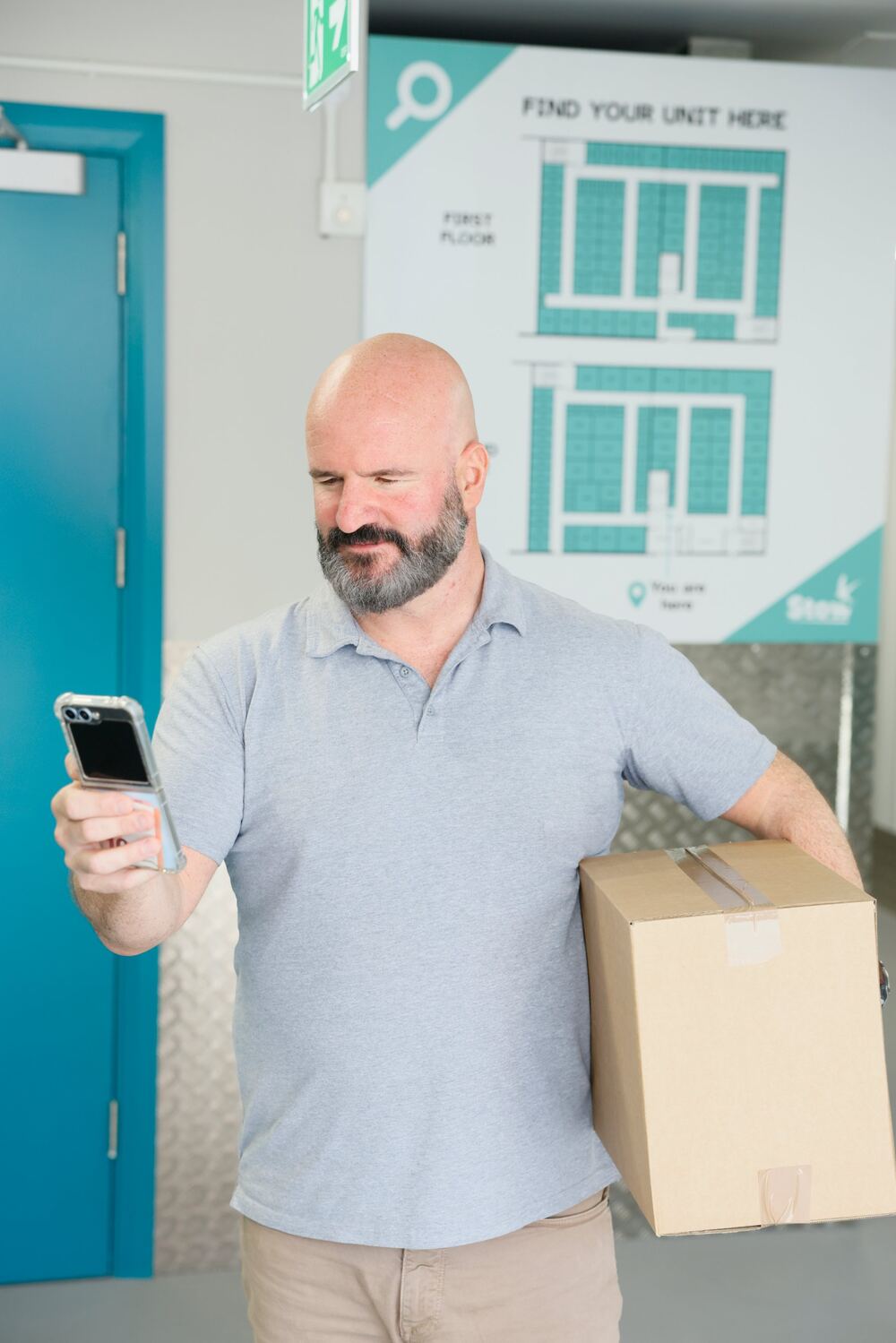
Heading off for a year in Australia, a contract in the Middle East, or finally moving home to Ireland? Here's how to store your belongings in Dublin while you're away, manage a storage unit online from abroad, and bridge the gap while you house-hunt.
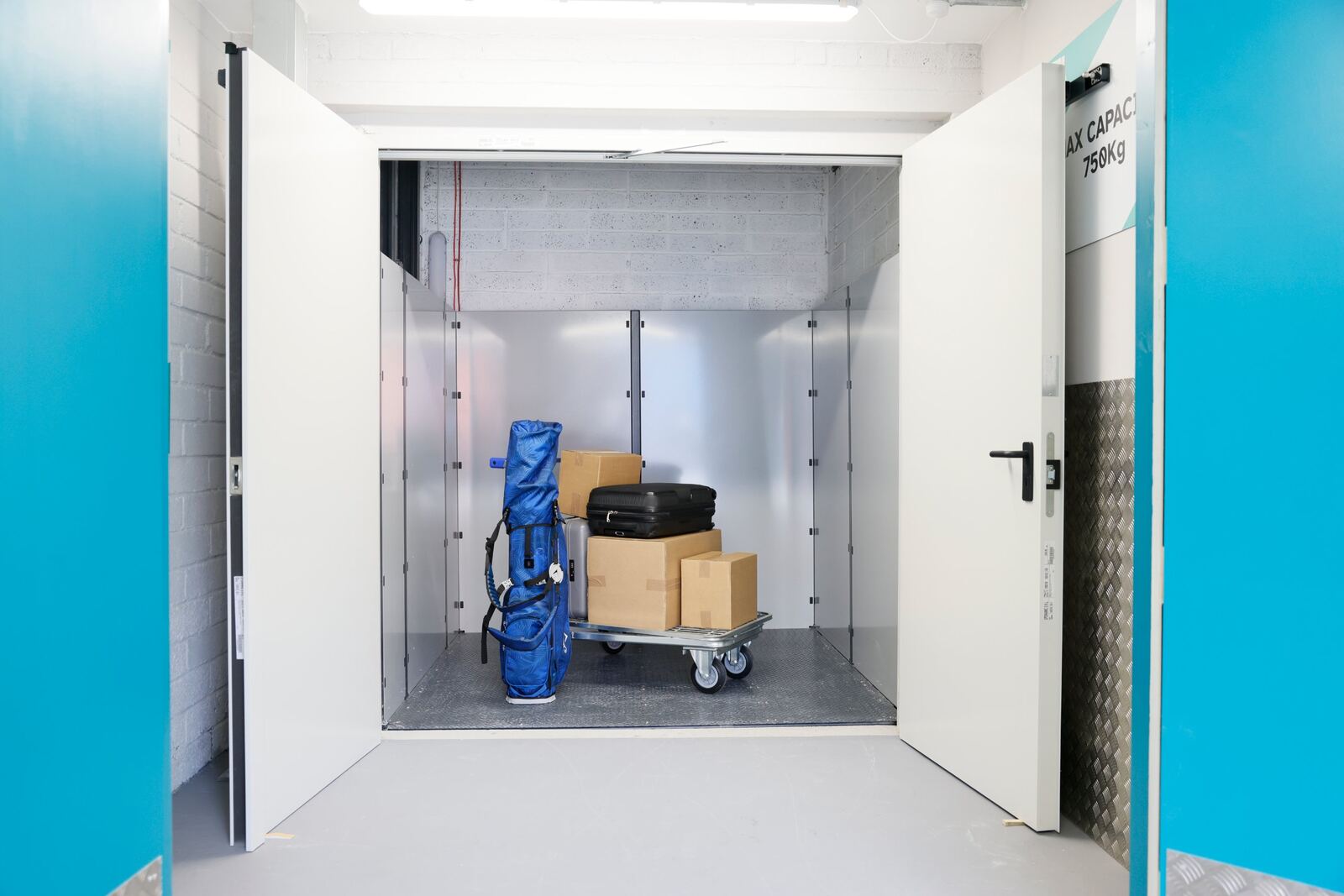
Irish winters are hard on garden furniture, barbecues and bikes. Here's how to clean, prepare and store them properly so they're ready for spring, plus options for apartment dwellers with no shed or garage.